Construction and trades
Keep power tools, fittings, fasteners, safety equipment, and smaller materials secured close to the work area.
Final quote depends on branch inventory, condition, delivery distance, site access, placement direction, and selected upgrades.
Storage fit
Keep power tools, fittings, fasteners, safety equipment, and smaller materials secured close to the work area.
A space-saving option for garden tools, seasonal belongings, renovation materials, bicycles, and household equipment.
Store maintenance tools, feed equipment, fencing supplies, smaller replacement parts, and seasonal items in a secure location.
Create convenient overflow storage for supplies, records, maintenance equipment, event materials, and smaller inventory.
What to expect
Choose the container that fits the job, the site, and the level of presentation you need. Newer units are cleaner and more uniform, used units are practical budget storage, and specialty door layouts can improve access.
The reduced width and height allow the container to fit into locations that may not accommodate wider or taller mini containers.
The corrugated-steel construction, cargo doors, seals, and durable flooring provide practical protection for items stored outdoors.
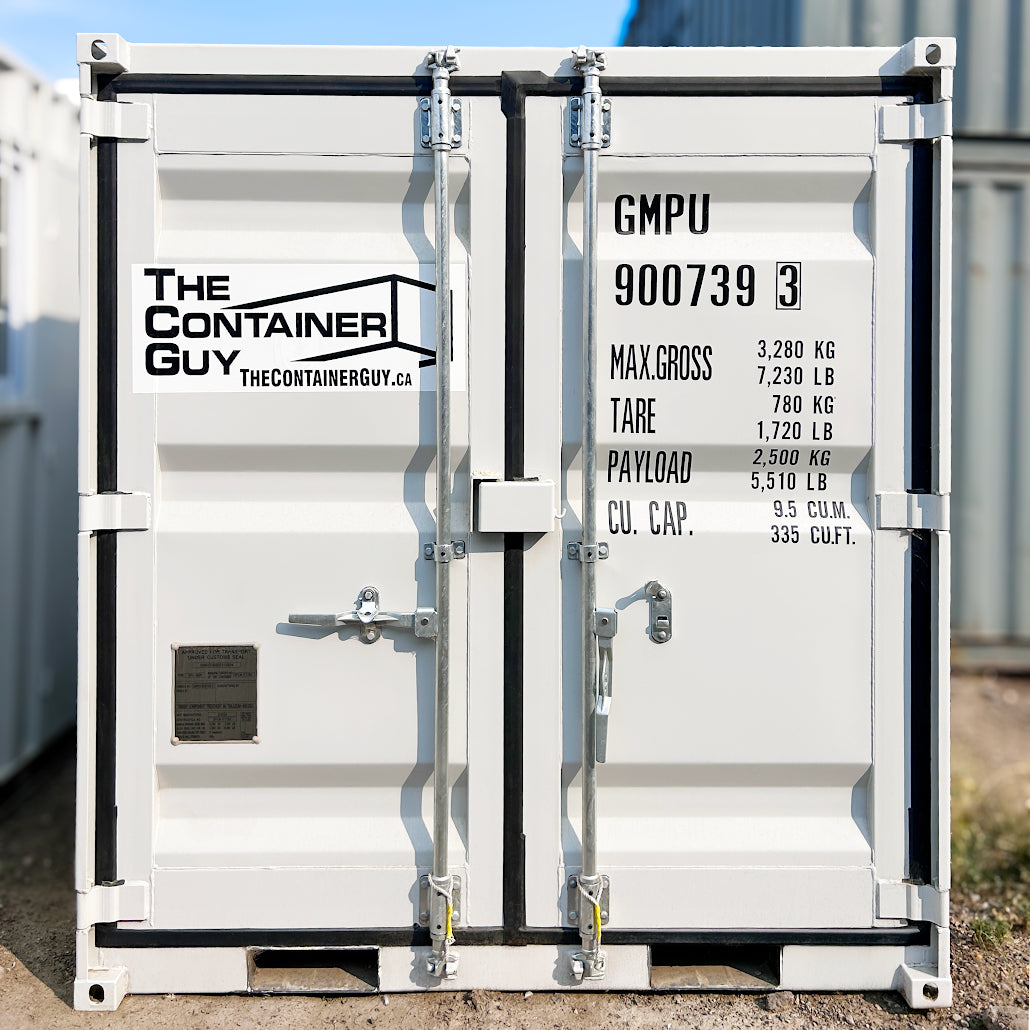
Double cargo doors with locking bars provide convenient access. A lock box helps protect the padlock area against unauthorized access.
The smaller size and lower tare weight can simplify delivery and placement compared with larger containers, subject to site access and equipment requirements.
Integrated forklift pockets allow the empty container to be lifted or repositioned using appropriately rated material-handling equipment.
New or used
Delivery reality
Delivery works best when the placement plan is clear before dispatch. Confirm the delivery address, preferred door direction, surface, overhead clearance, turning room, and access limits before the truck arrives.
Useful add-ons
Protect the padlock area and make the container more difficult to tamper with.
Improve air movement and help manage moisture when storing items affected by condensation.
Use the available wall and vertical space to organize tools, parts, supplies, and smaller inventory.
Add lighting, receptacles, switches, and other electrical components when regular access is required.
Add an appropriately sized ramp when carts, bicycles, wheeled tools, or equipment must be moved through the cargo doors.
Buyer questions
A one-trip container has typically been manufactured overseas, loaded once, and shipped to North America. It normally has much less wear than a used cargo-retired container. For specialty mini containers, confirm whether the unit was actually used for one cargo trip or is a new-build unit transported without cargo.
A 7 ft mini container is generally considered a specialty compact container. Its dimensions, lifting points, load ratings, and certifications may differ from conventional 20 ft and 40 ft ISO containers.
The steel shell, cargo doors, and seals are intended to provide weather-resistant storage. The condition of the roof, walls, doors, flooring, and seals should be confirmed before purchase.
The container is suitable for tools, equipment, parts, maintenance supplies, seasonal belongings, bicycles, records, dry materials, and smaller commercial inventory. It is not climate-controlled unless specifically modified.
Yes. Its reduced width and height make it particularly useful for narrow yards, driveways, confined jobsites, and locations with restricted access. The complete delivery path must still be confirmed before dispatch.
Some containers marketed as “7 ft” have an overall exterior length slightly greater than seven feet. The example specifications above show approximately 7 ft 4 in or 2,235 mm. Confirm the actual unit before planning the site.
A full foundation is not normally required for basic storage. Firm and level supports help maintain stability, drainage, and proper cargo-door alignment.
Yes, provided the site can be accessed safely and appropriately rated lifting or loading equipment is available.
Stacking limits vary by manufacturer. Do not stack the container unless its data plate or manufacturer’s documentation confirms the approved stacking arrangement and load.
Yes. Common modifications include vents, shelving, lighting, electrical components, security lock boxes, ramps, custom paint, and branding. Structural modifications should be properly evaluated before installation.
Container pricing depends on branch inventory, condition, delivery distance, required equipment, site access, placement requirements, and selected upgrades. A delivered quote confirms the correct unit and total price before you commit.
CMW parts checkout